
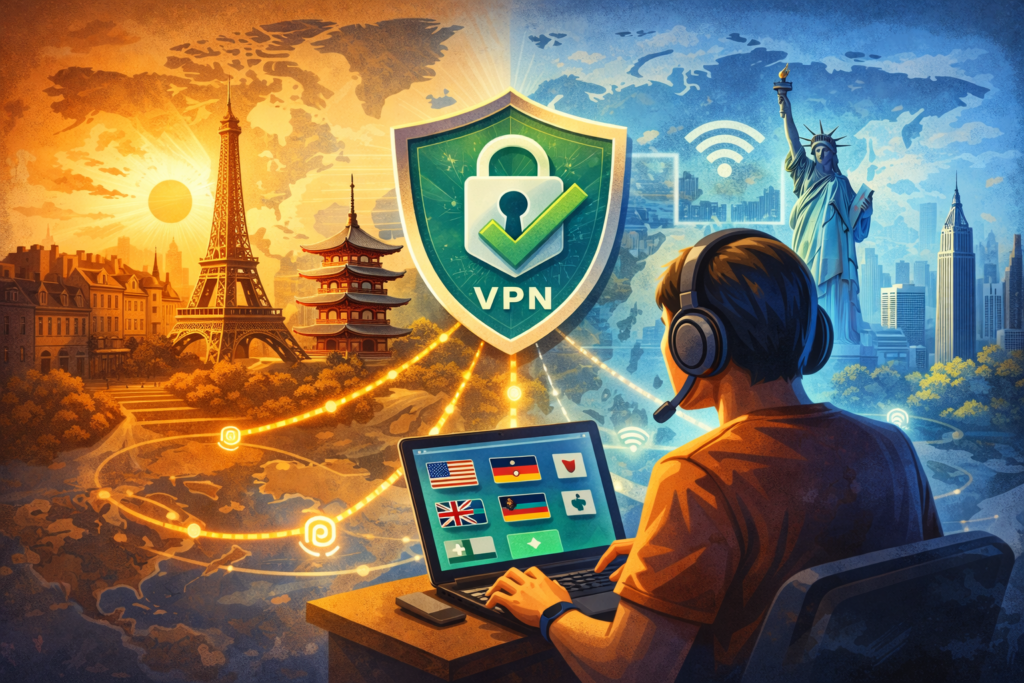
Traveling abroad often reveals how differently the internet behaves from one country to another. A website that loads instantly at home may redirect you to a different version overseas. A banking app may trigger additional verification steps. Even search results can shift based on your location. This is where a VPN to change location becomes relevant for everyday users who want a more consistent browsing experience.
A free VPN works by routing your internet traffic through a remote server. Instead of appearing to connect from your physical location, your connection reflects the server’s location. For many users, this creates the practical effect of “browsing like a local,” even while traveling or living abroad.
Understanding how this works—and what it realistically offers—helps set the right expectations.
What It Means to “Browse Like a Local”
When websites detect your IP address, they use it to estimate your country, region, and sometimes even city. This information influences:
- Language preferences
- Currency display
- Available services
- Search engine results
- Regional website versions
A free VPN assigns you a different IP address, tied to the server you select. If you connect to a server in your home country while traveling, websites may display content as if you were physically there. Likewise, connecting to another country can allow you to explore region-specific versions of services.
It is important to note that a VPN does not change your citizenship or override every restriction automatically. What it changes is your visible network location.
How a Free VPN Technically Works
A Virtual Private Network creates an encrypted tunnel between your device and a remote server. Instead of sending data directly to the website you are visiting, your device sends it first to the VPN server. The server then forwards the request on your behalf.
This process achieves two main outcomes:
- Your real IP address is hidden from the destination website.
- Your traffic is encrypted during transmission.
For casual users, this can mean greater privacy when browsing on hotel Wi-Fi, airport networks, or unfamiliar connections. The encryption layer makes it more difficult for third parties on the same network to monitor your activity.
Everyday Scenarios Where a Free VPN Helps
Browsing like a local is not limited to streaming or entertainment. In daily life, location consistency can matter in subtle but practical ways.
Accessing Home Services While Traveling
Many people rely on banking portals, delivery platforms, or local news websites that behave differently when accessed from abroad. A VPN connection to your home country can reduce verification friction and maintain familiar layouts.
Maintaining Consistent Search Results
Search engines tailor results based on geographic signals. If you are researching services in your home country while temporarily abroad, a VPN server in that country can produce more relevant results.
Public Wi-Fi Protection
Browsing from cafés, airports, or shared networks exposes your connection to potential monitoring. A free VPN adds a layer of encryption that helps protect login credentials and session data from interception.
These use cases demonstrate that “browsing like a local” is often about stability and privacy rather than bypassing restrictions.
Differences Between Free and Paid VPN Services
Free VPN services usually focus on essential functionality. They provide basic encryption and access to a limited number of server locations. Paid services often expand on this with more servers, faster speeds, and advanced features.
Typical differences include:
- Data limits on free plans
- Fewer available server locations
- Standard support instead of priority assistance
- Limited simultaneous device connections
For users who only need occasional location switching or added privacy on public networks, a free VPN may be sufficient. For high-bandwidth activities or continuous usage across multiple devices, paid options might offer more flexibility.
Understanding these trade-offs helps avoid unrealistic expectations.
Privacy and Security Considerations
Using a VPN to change your visible location does not automatically guarantee complete anonymity. Responsible providers clearly explain what data is collected and how it is handled.
When evaluating a free VPN, consider:
- Whether encryption protocols are industry standard
- If the privacy policy clearly outlines data practices
- How transparent the provider is about limitations
A legitimate service focuses on connection security and avoids invasive permissions unrelated to network functionality.
Using a Free VPN on Android
Mobile devices are often the primary browsing tool for travelers. On Android, installing a verified free VPN app from an official store helps reduce the risk of modified or unsafe software.
After installation, users typically:
- Open the app.
- Select a preferred server location.
- Activate the connection with a single tap.
The app then encrypts outgoing traffic and assigns a new IP address corresponding to the chosen server. This setup process is designed to be straightforward, even for users without technical experience.

Using a Free VPN on iOS
iPhone and iPad users can also benefit from a free VPN app through the official App Store. The setup process mirrors the Android experience:
- Download from the official listing.
- Grant necessary network permissions.
- Select a location and connect.
iOS integrates VPN connections at the system level, meaning the protection applies across browsers and apps once activated. For travelers, this ensures that location-sensitive services respond according to the selected region rather than the physical one.
Practical Expectations: What a Free VPN Can and Cannot Do
A free VPN can:
- Change your visible IP location
- Encrypt your traffic on unsecured networks
- Provide basic privacy from local network observers
It cannot:
- Guarantee total anonymity against all tracking methods
- Override every type of geographic licensing restriction
- Replace broader cybersecurity practices
Combining a VPN with strong passwords, updated software, and cautious browsing habits produces better overall protection.
A Balanced Approach to Browsing Anywhere
Browsing like a local anywhere in the world is less about trickery and more about control over how your connection appears online. A free VPN gives users the ability to select a digital location that matches their needs at a given moment.
For travelers, remote workers, and everyday users who value flexibility, this can mean smoother access to familiar services and added privacy on unfamiliar networks. The key is to choose a transparent provider, understand the limitations, and use the tool responsibly.
When used thoughtfully, a free VPN becomes a practical way to maintain continuity in a changing digital landscape—without unnecessary complexity or cost.
More Stories
How Do You Optimally Protect Your Data in the Cloud?
Espresso on the Go: Portable Machines for Canadian Coffee Lovers
Exploring Sustainable Options: Eco-Friendly Slate Tiles for Green Homes