
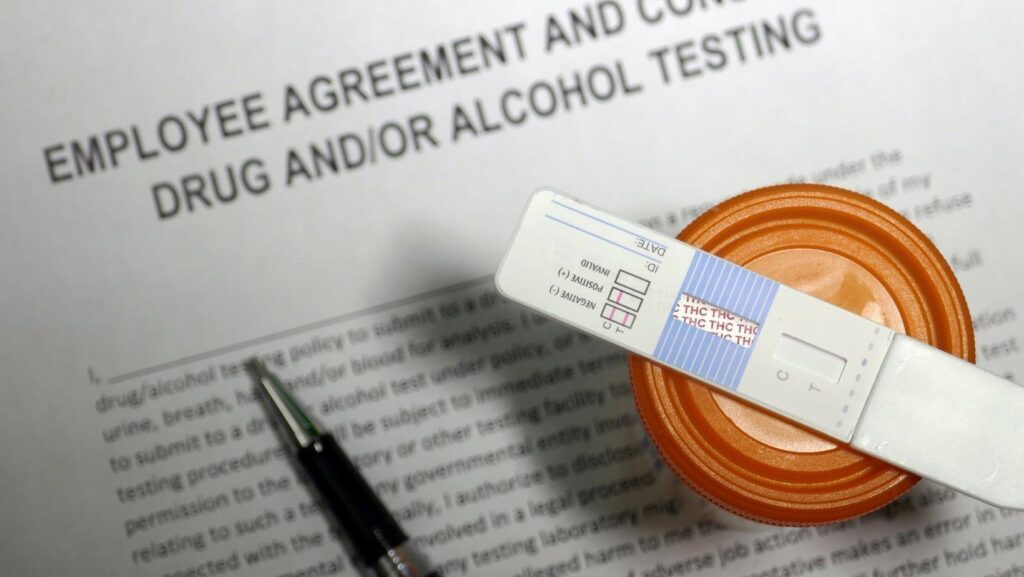
Job site safety has improved meaningfully over the past two decades. Better training programs, clearer safety protocols, modern personal protective equipment, and tighter regulatory oversight have all contributed to fewer accidents and fewer days lost. Yet the headline injury numbers remain stubbornly high. The United States Bureau of Labor Statistics regularly reports several million workplace injuries and illnesses each year, and a meaningful share of those incidents involve impairment as a contributing factor. That is one of the reasons workplace drug testing has stayed a core part of safety programs across construction, manufacturing, logistics, transportation, healthcare, and any environment where employees operate machinery or make safety-critical decisions.
The logic behind workplace drug testing is not punitive. It is preventative. An employee who comes to work impaired is at higher risk of slipping, falling, mishandling equipment, or making a decision that puts coworkers in danger. Training cannot fully solve this problem because training assumes the worker is in a fit state to apply what they have learned. Drug testing addresses the gap between policy and reality. It identifies risk before an incident occurs and creates a clear, consistent response after one happens.
Most modern workplace programs use four touchpoints. Pre-employment testing screens new hires before they start work. Random testing keeps existing employees aware that policies are real and enforced. Post-incident testing follows any meaningful workplace accident and helps determine whether impairment played a role. Reasonable suspicion testing applies when a manager or supervisor has documented evidence that an employee may be impaired on the job. Each touchpoint addresses a different risk window, and together they reduce the chance that an impaired worker ever gets close to a job site activity.
The tools used in these programs have come a long way from the early days of single-substance dip tests. Modern multi-panel rapid tests can screen for ten, twelve, sixteen, or more substances in a single cup, dip card, or oral swab. Companies such as 12 Panel Now supply multi-panel urine drug test cups, dip cards, oral swabs, and test strips for professional and forensic use. The products are widely used across industries because results are available within a few minutes, the cups include built-in temperature strips to help confirm sample integrity, and the per-unit cost is low enough that comprehensive programs are financially feasible even for smaller employers.
For employers considering or upgrading a workplace drug testing program, a few practical principles apply. The policy should be written, distributed to employees, and consistent with applicable state and federal regulations. The substances tested for should match the relevant risks of the work, which is why many programs choose a 10-panel or 12-panel test rather than the simplest options. The chain of custody for samples should be documented carefully, especially for post-incident testing where the result may be referenced in workers' compensation or legal proceedings. And the response to a positive result should be clearly defined in advance so that the program is fair and predictable.
Beyond compliance and incident prevention, there is a softer benefit. Workplaces with consistent drug testing programs often report lower absenteeism, lower turnover, and higher overall morale, because employees know that everyone on the team is being held to the same expectations. The conversation about workplace safety is not just about ladders, scaffolds, and harnesses. It is also about the state of mind and body of every worker on the site that day. Drug testing is one of the practical, affordable tools that addresses the second half of that equation.
Frequently Asked Questions
What is a multi-panel drug test? A multi-panel drug test screens for several substances at once using a single sample. Common configurations include 10-panel and 12-panel cups, dip cards, oral swabs, and test strips.
When do employers typically run drug tests? Most programs include pre-employment screening, random testing, post-incident testing, and reasonable suspicion testing. Each touchpoint addresses a different risk window in the employment relationship.
How accurate are rapid drug tests? Reputable rapid tests from established suppliers offer accuracy rates above 99 percent for the substances they screen for. Positive results are often sent to a laboratory for confirmation testing before any employment decision is made.
Are drug testing programs legally required? Some industries, such as commercial transportation, have federal testing requirements. Many other employers run programs voluntarily as part of broader safety and risk management policies. State laws vary, so employers should design programs with legal counsel.
Do drug tests detect alcohol? Many multi-panel drug test cups do not include alcohol. Alcohol is typically tested separately using breath, saliva, or urine alcohol tests, depending on the program design.
More Stories
What Makes NFL Game Day More Interactive for Modern Fans
How Smart Cities Support Resident Well-being
5 Ways Modern Casinos Are Enhancing the Player Experience Through Tech
Win777 Vegas X Guide: Web Version, Domain Confusion and App Access